Refining Instincts
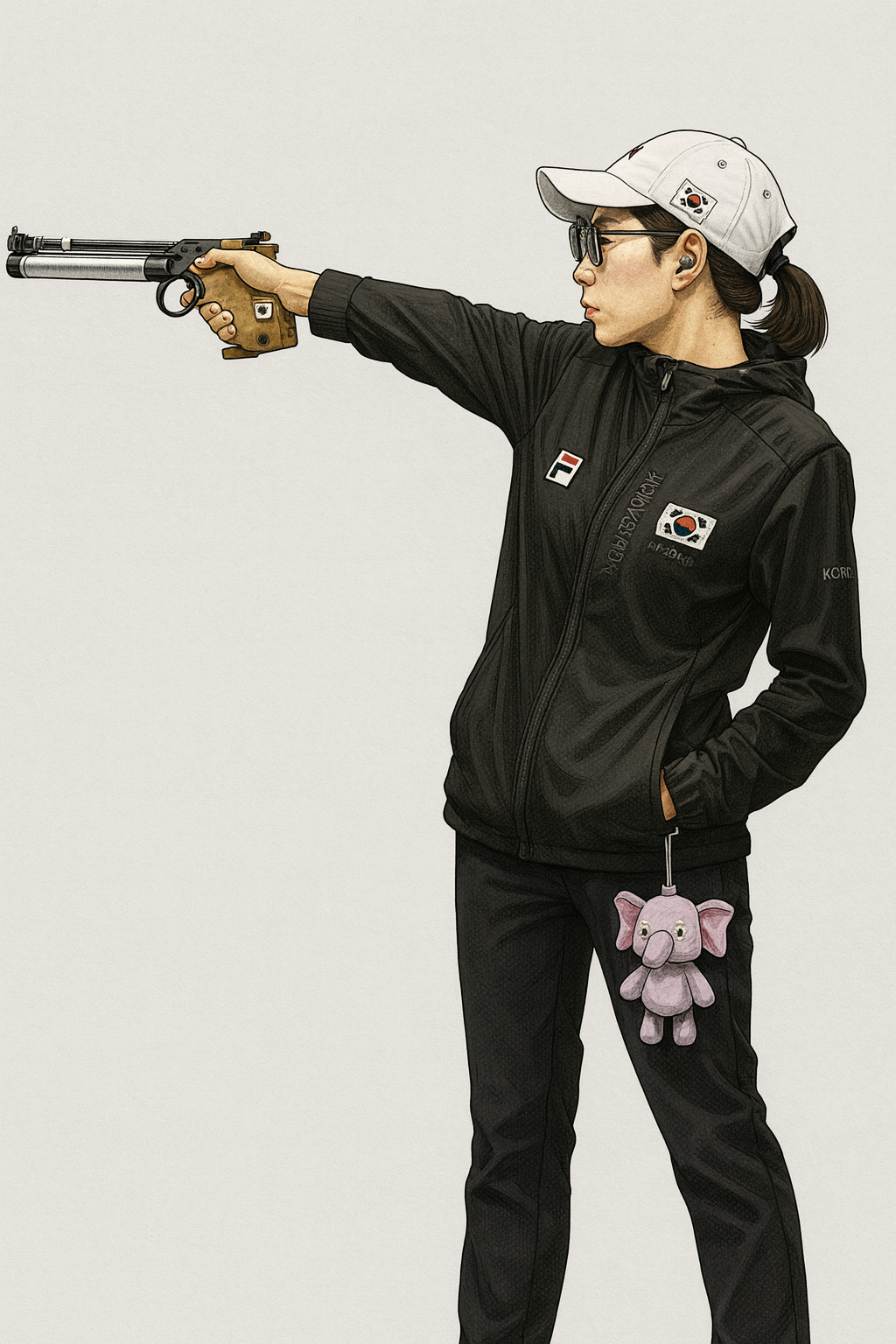
World champion shooter Kim Ye-ji at the 2024 Paris Olympics
Knowing something intellectually and executing it under pressure are two different beasts.
The bridge between them is building instinct and mental clarity under fire.
Here are some tips on how to level up your real-time decision-making so it feels more natural, especially in fast-paced moments:
Automate the Basics
Goal: Let your body handle mechanics while your mind scans for strategy.
The more muscle memory you build, the fewer decisions your brain has to actively make.
Repetition breeds speed: Drills like third shot drops, dinks, and resets should be second nature so your brain is free for strategy.
Decisions baked into practice: For example, during dinking drills, alternate between crosscourt and middle with intention, so decision pathways become automatic.
Slow the Game Down Mentally
Goal: Ground your mind so your instincts can emerge and shine.
Good decision-makers in sports often say the game “slows down” for them. That’s a skill you can build.
Breath between points. A deep breath resets your nervous system and helps you respond rather than react.
Create routines (e.g., Prior to serving: bounce the ball twice, set intention: “I’m going to target their backhand.”), to give your brain structure under pressure.
Use Anchor Cues
Goal: Give your brain a cue phrase or internal script that lets you bypass overthinking. It’s about directing attention to the right thing at the right moment while reducing cognitive load.
In the moment of hitting a ball, trying to give too many instructions to yourself can cause tightening, mental confusion, and inconsistency. Anchor Cues can be used as a mental shortcut that prevents the brain from getting stuck in conscious control, and instead primes it to access integrated, trained skills fluidly.
Example: When hitting a 3rd shot drop, think “Soft, to the chest.” – which creates a focus on the type of shot to hit at your opponent, who is at the kitchen line waiting to hit their 4th shot. This phrase can allow your trained technique to emerge reliably as you let go of specifically-detailed instructions such as: soft grip, create space, drop the tip of the paddle, get low, hit the ball after the apex of the bounce, etc.
Train Pattern Recognition
Goal: Turn your experience into mental shortcuts.
Decision-making improves as your brain learns to recognize patterns quickly.
Watch high level pickleball and pause mid-point. Ask: “What would I do here?” Then hit play and see what happens.
During recreational play, mentally note what precedes success or errors (e.g., “Every time I go body in hands battles, I win more often”).
Practice with someone who will call out decisions mid-drill (“Drop it!” “Lob it!”), forcing your brain to adapt quickly.
Simulate Pressure in Practice
Goal: Normalize decision-making under stress.
It’s easy to make good decisions when it doesn’t count. So bring intensity to your reps.
Play games to 5 points, must win by 2, so each decision feels more important.
Or use “punishment rules”: if you make a low-percentage decision, you lose 2 points, not 1.
Mix in chaos drills - e.g., unpredictable feeds, quick transitions - so you’re not always comfortable.